Contact
Do you have any questions?
We look forward to your inquiry.
Service & care
Cleaning, care & repair of solid surface material
If a scratch or damage does occur, solid surface material can be easily refurbished and repaired - a decisive advantage over many other materials.
Daily care & cleaning
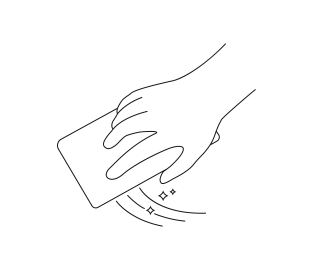
The daily care of solid surface material is uncomplicated. For normal cleaning, it is sufficient to wipe the surface with a damp cloth and a mild cleaner. The surface should then be wiped dry to prevent water stains. If necessary, light soiling can also be removed with a gentle scouring powder and a soft sponge - always in a circular motion and without scratching.
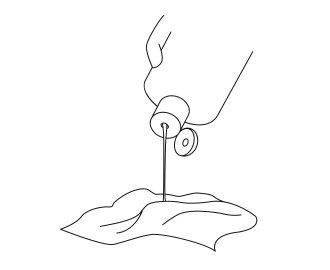
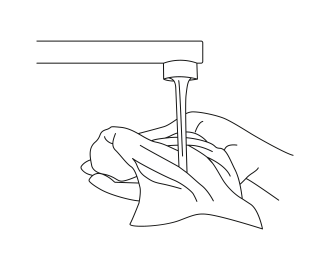
1. Moisten a soft cloth.
Important: do not use a scouring pad!
2. Apply mild scouring milk to the cloth. Make sure that the cleaner is suitable for acrylic surfaces.
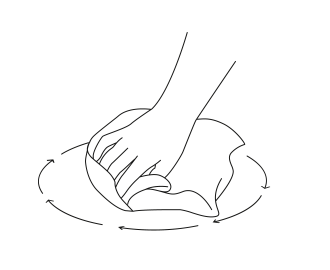
3. Apply to the surface to be cleaned using even, circular movements.
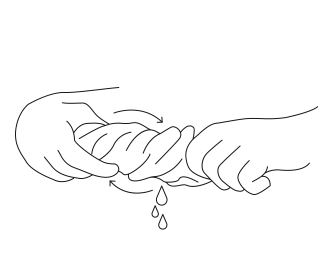
4. Rinse the cloth well with clear water.
5. Wipe off the cleaning agent several times with warm water.
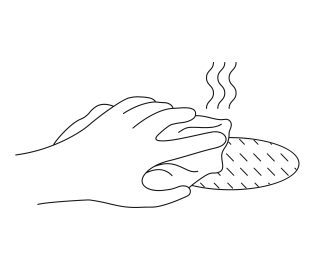
6. Dry the surface with a clean, soft cloth.
Cleaning for heavy soiling
For heavier stains such as coffee or wine stains, a gentle scouring milk is usually sufficient: simply work in with a cloth or a non-scratching sponge in a circular motion, rinse thoroughly and rub dry. In many cases, more stubborn residues can also be removed with bleach. Limescale deposits around taps are best removed with a commercially available descaler.
With darker colour tones, signs of use may become visible more quickly, which is why more careful maintenance is recommended. Special stains such as nail polish can be removed using an acetone-free remover or a gentle scouring cream. Small burn marks or nicotine residues can also be removed using a non-abrasive scouring sponge or a small amount of scouring cream.
How to protect your solid surface
Solid surface material is resistant and damage can be easily avoided with simple measures. Hot pots or pans should never be placed directly on the surface - always use coasters or heat protection mats. Cutting work should also not be carried out on the surface, as knives can leave scratches: a cutting board is the safe choice here. Aggressive chemicals or solvents should not be used. If something does spill, rinse the area thoroughly with water immediately. This will keep the surface hygienic, functional and visually appealing.
Repair & refinishing
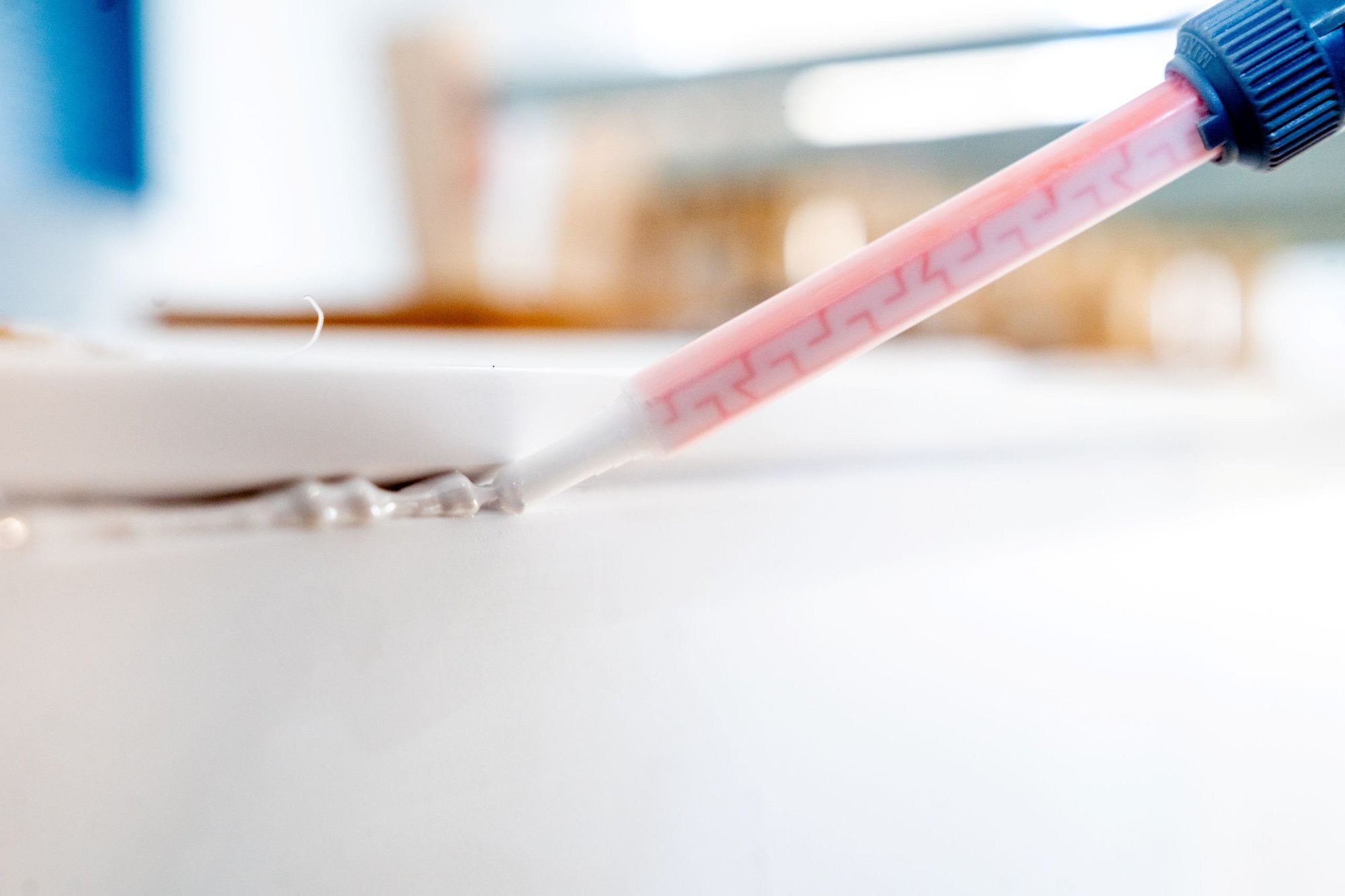
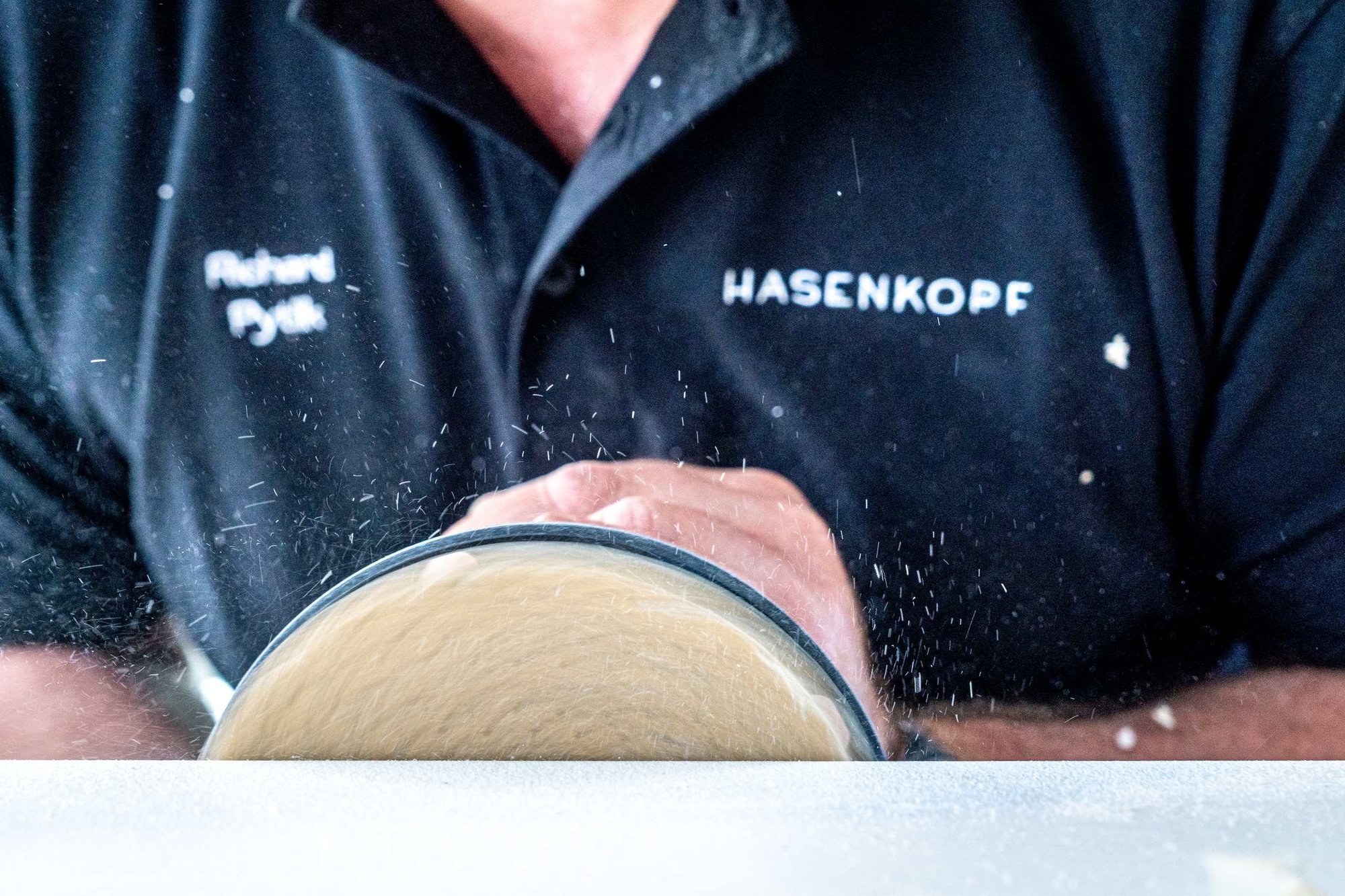
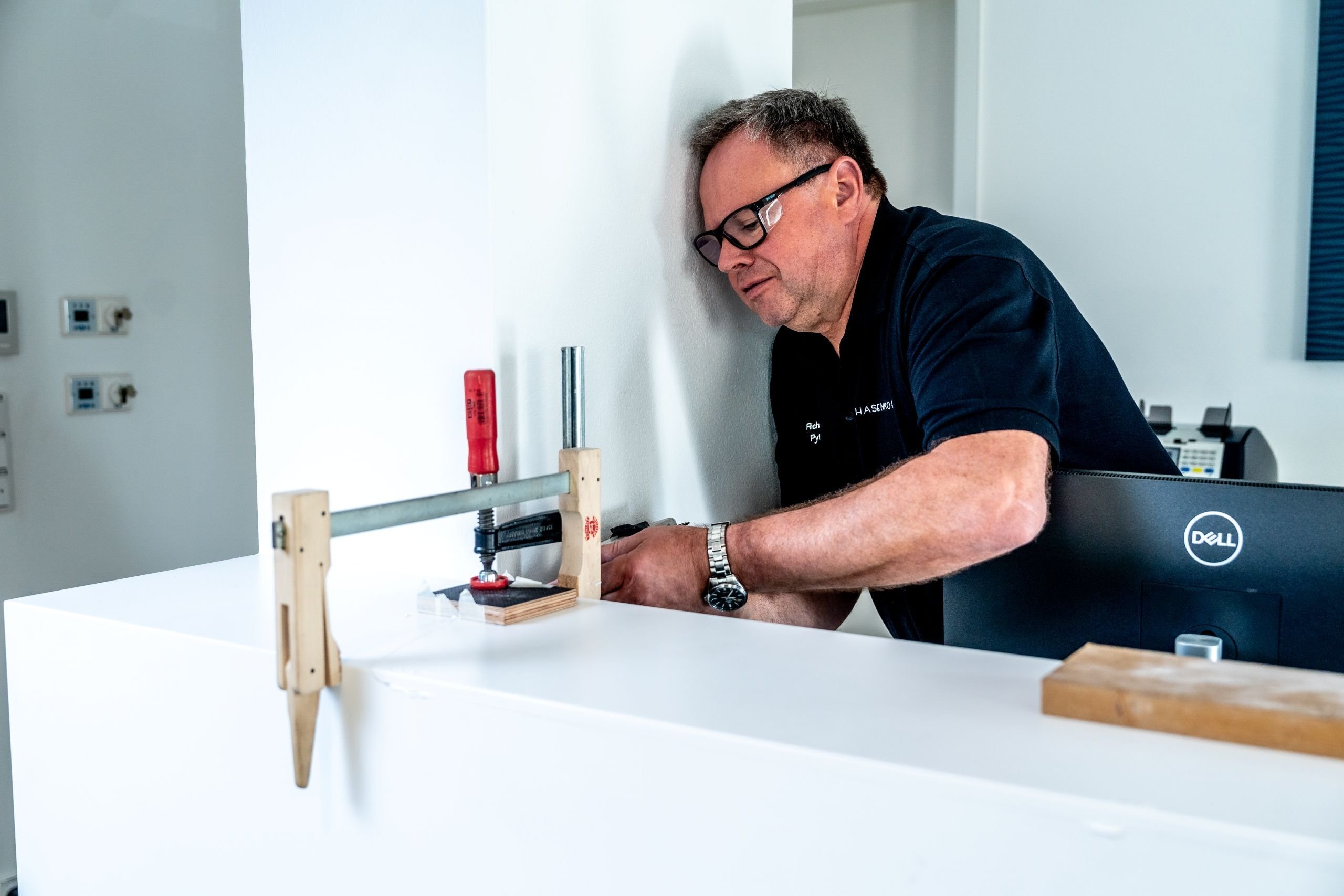
One major advantage of solid surface material is that it can be repaired. In many cases, small scratches can be sanded out with a sanding pad or fine sandpaper. Smaller dents or holes can be made almost invisible by professional filling and reworking.
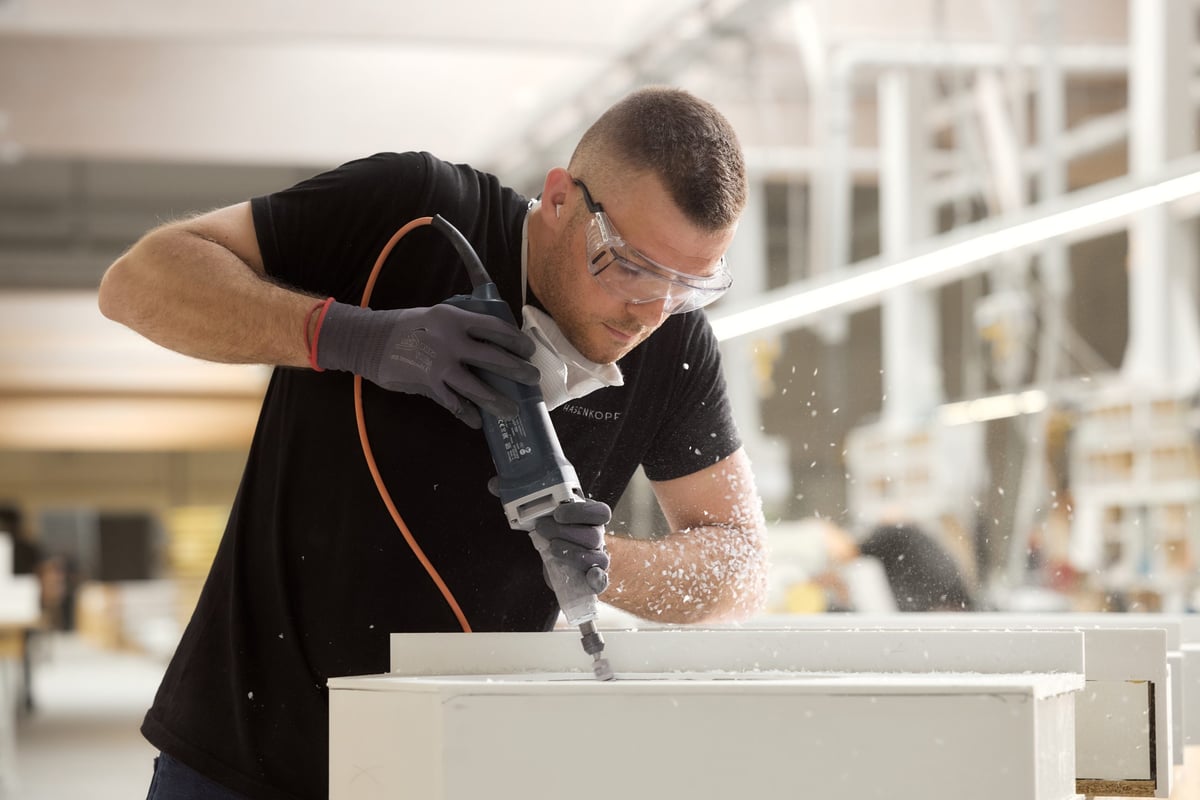
Larger damage, such as cracks or burn marks, can also be repaired: The damaged area is milled out and replaced with a suitable piece of solid surface material, which is then bonded, sanded and polished. This creates a homogeneous, hygienic surface that looks as good as new. Even after many years, the surface can be completely refreshed by professional sanding and polishing - so solid surface material remains aesthetically pleasing and functional for decades to come.


How do I clean solid surface material on a daily basis?
Simply wipe the solid surface with a damp cloth and a mild cleaner, then dry it thoroughly. This keeps the surface hygienic and looking good.
What should I do about stains or heavier soiling?
Heavier stains can usually be removed using dishwashing liquid or a mild scouring powder. For limescale deposits, a standard household descaler can be used (allow to work for a maximum of 10 minutes).
Does solid surface material scratch?
Yes, sharp knives or rough sponges can leave marks. Therefore, always use cutting boards and gentle cleaning cloths. Small scratches can usually be sanded out.
Is solid surface material heat-resistant?
Solid surface material is robust, but should be protected from high heat. Always use coasters or heat protection, as hot pans or pots can damage the surface.
Can damage be repaired?
Yes, one major advantage of solid surface material is that it can be repaired. In many cases, scratches or damage can be repaired almost without a trace by sanding or polishing.
Stay inspired - Sign up for our newsletter
Innovations, projects and design ideas straight to your inbox - always be the first to find out what makes Hasenkopf "Simply Special".